Tell us about the job
Takes about a minute. No obligation.
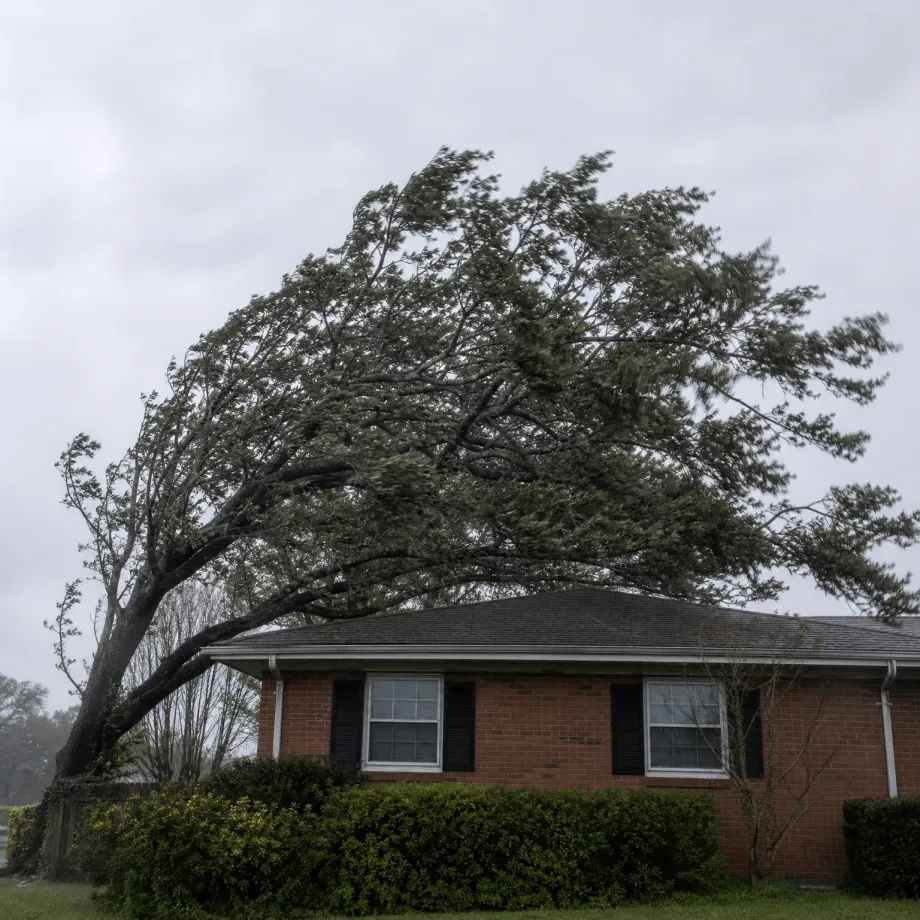
A contractor quoting a water heater installation in Putnam County starts from what the climate here actually demands, because sizing and equipment selection change when the load is real and recurring. 136 severe weather events were recorded in Putnam County, Tennessee between 2015 and 2024. At that rate, severe weather is a standing condition for every system in this area, and a water heater installed without accounting for it will be undersized for the work it faces. Contractors spec the installation accordingly, from the unit itself to how it connects to the structure around it.
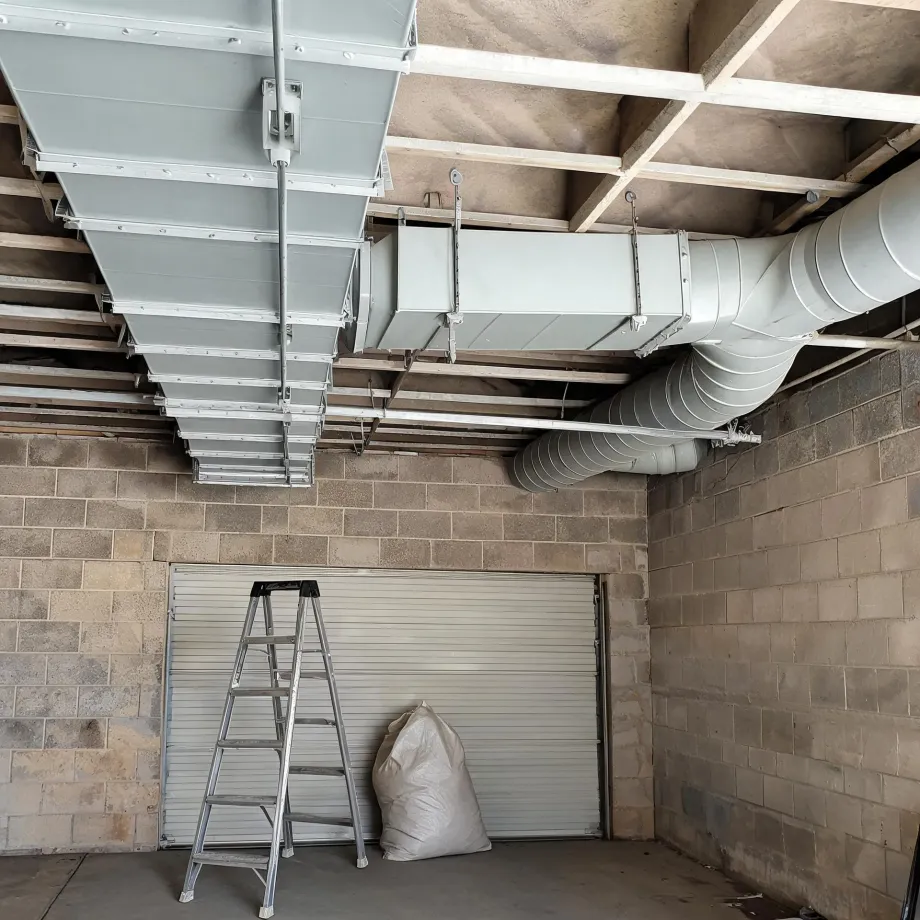
Ductwork and electrical service installed for one generation of equipment often need assessment before a new water heater goes in, and in Putnam County that assessment shapes the quote as much as the unit itself does. Half the homes in Putnam County, Tennessee were built in 1991 or earlier (2020-2024 ACS 5-year). That means a substantial portion of the housing stock here carries infrastructure that was never designed for what homeowners are putting in now. A contractor will open walls or trace runs to see what the existing setup will and will not support before pricing the job.
What a Water Heater Installation Covers
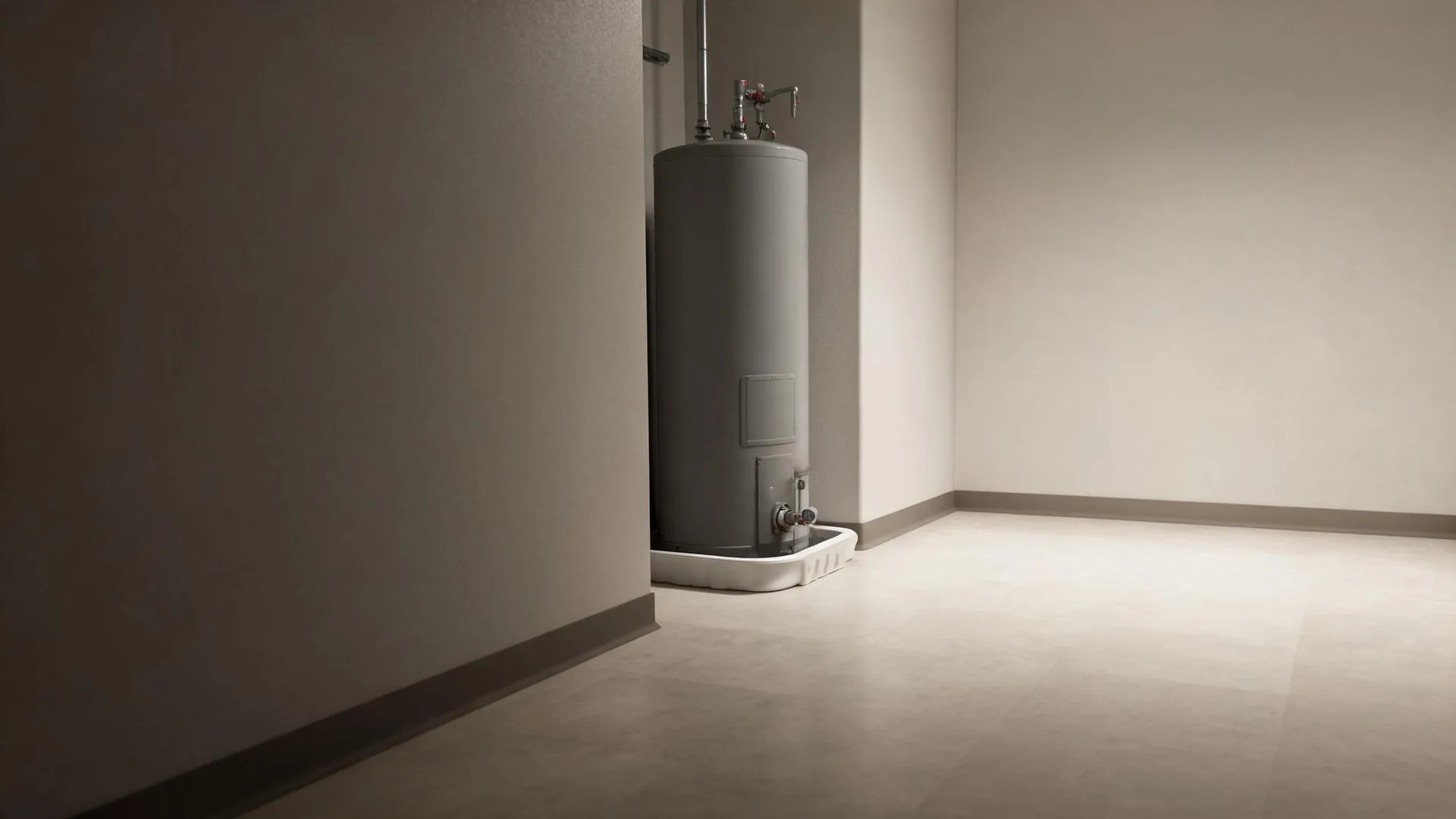
The tank or tankless unit is the centerpiece of the system. A storage-tank unit sits in a utility closet, basement, or garage and holds a reservoir of heated water ready for use. A tankless unit mounts on a wall and heats water on demand as it passes through.
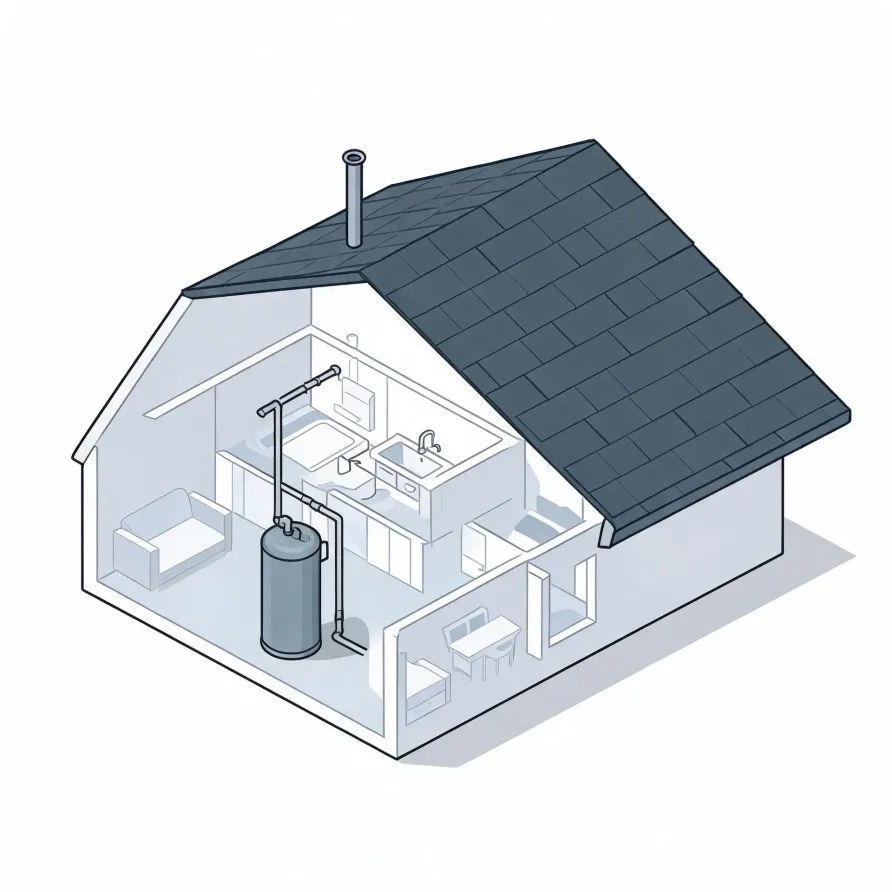
Feeding the unit are a cold-water supply line coming in and a hot-water line carrying water out to every fixture in the house. A pressure-relief valve mounts directly on the unit as a safety device, and a drain pan sits beneath it to catch any discharge or leakage at the base.
The drawing shows the general layout of these components, and a licensed contractor determines what applies to the specifics of your home.
Find a contractor in Putnam CountyPutnam County, by the numbers
136 severe weather events were recorded in Putnam County, Tennessee between 2015 and 2024.
NOAA National Centers for Environmental Information, Storm Events Database, bulk CSV export, events 2015-01-01 through 2024-12-31.Half the homes in Putnam County, Tennessee were built in 1991 or earlier (2020-2024 ACS 5-year).
U.S. Census Bureau, 2020-2024 American Community Survey 5-Year EstimatesPutnam County, Tennessee holds 36,506 housing units (2020-2024 ACS 5-year).
U.S. Census Bureau, 2020-2024 American Community Survey 5-Year EstimatesOwners occupy 61.2% of the occupied homes in Putnam County, Tennessee (2020-2024 ACS 5-year).
U.S. Census Bureau, 2020-2024 American Community Survey 5-Year EstimatesSevere Weather Events in Putnam County
Storms, temperature swings, and sudden weather shifts put real demand on water heaters, shortening service life and driving the kind of failures that push homeowners toward full replacements. How hard local weather works your equipment is a Putnam County question, not a national average.
136 severe weather events, 2015–2024. Source: NOAA National Centers for Environmental Information, Storm Events Database.