Tell us about the job
Takes about a minute. No obligation.
A contractor sizing or replacing a water heater here starts with the unit itself: how old it is, whether it was installed correctly the first time, and what years of ordinary use have done to the anode rod and tank lining. 84 severe weather events were recorded in Washington County, Tennessee between 2015 and 2024. At roughly the national midpoint, that record means severe weather is a real but irregular presence rather than a constant operating condition. A water heater that has failed in this county has almost certainly failed for reasons the weather alone cannot account for. The install specs, the original equipment choice, and how the unit was maintained over its life are what a contractor examines first.
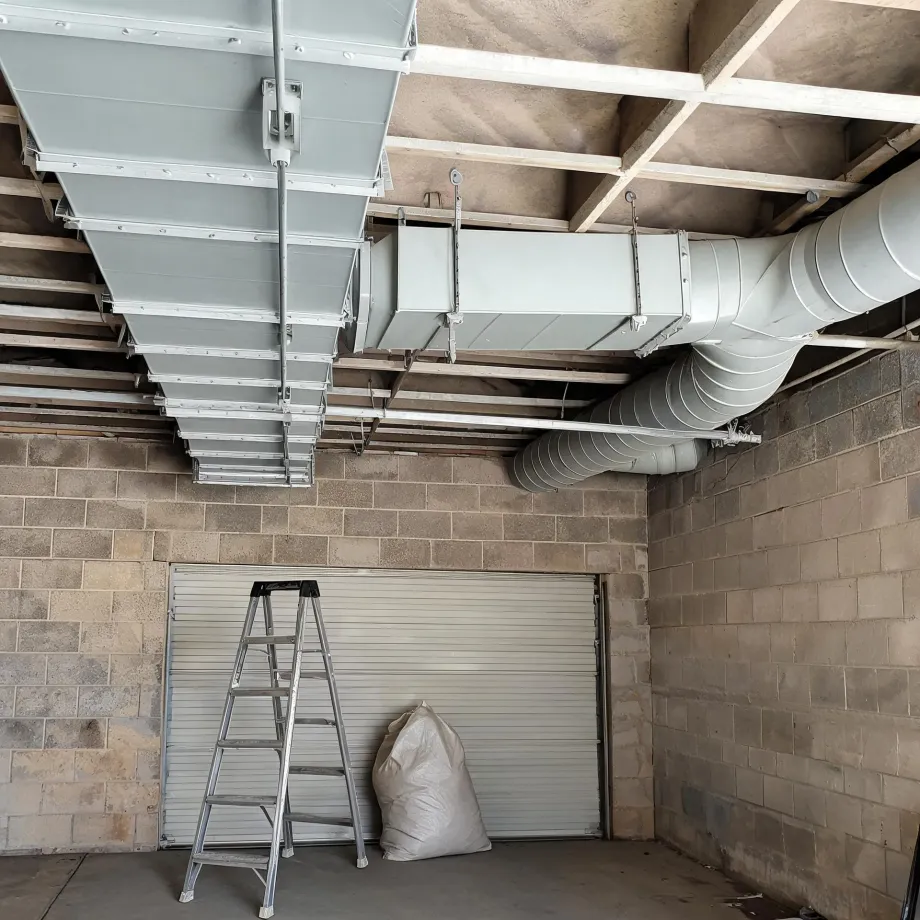
Ductwork and venting runs that were sized for equipment of an earlier era are what a contractor encounters when quoting a water heater installation in much of Washington County. Half the homes in Washington County, Tennessee were built in 1985 or earlier (2020-2024 ACS 5-year). That age gap matters for installation work in a specific way: the flue configuration and the space allocated for a unit reflect choices made for whatever was original to the house, and a new unit may draw or exhaust differently enough to require changes before it can be set. The electrical service feeding the installation area carries the same question. The equipment itself is straightforward to specify; what the house already has behind the wall is where the scope gets settled.
What a Water Heater Installation Covers
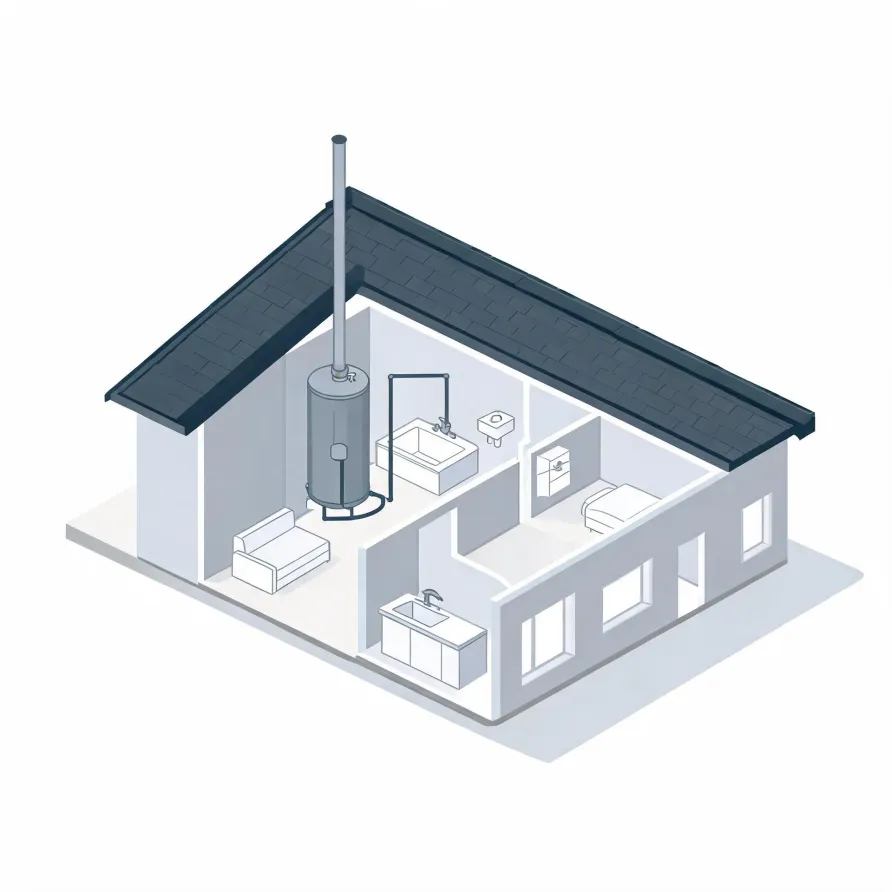
The water heater tank sits in a utility space, basement, or closet and holds the water that gets heated and sent to every fixture in the house. A gas unit has a burner assembly at its base and a flue that vents combustion gases out through the roof or wall. An electric unit carries heating elements inside the tank itself.
The cold water inlet and hot water outlet pipes connect at the top of the tank, and a temperature and pressure relief valve mounts on the side as a safety release. A drain valve sits at the base. On gas models, the gas supply line and a shut-off valve run to the unit from the home's main gas line.
The drawing shows a general layout of these components, and a licensed contractor determines exactly what applies to this house and its existing connections.
Find a contractor in Washington CountyWashington County, Tennessee, by the numbers
84 severe weather events were recorded in Washington County, Tennessee between 2015 and 2024.
NOAA National Centers for Environmental Information, Storm Events Database, bulk CSV export, events 2015-01-01 through 2024-12-31.Half the homes in Washington County, Tennessee were built in 1985 or earlier (2020-2024 ACS 5-year).
U.S. Census Bureau, 2020-2024 American Community Survey 5-Year EstimatesWashington County, Tennessee holds 62,077 housing units (2020-2024 ACS 5-year).
U.S. Census Bureau, 2020-2024 American Community Survey 5-Year EstimatesOwners occupy 64.5% of the occupied homes in Washington County, Tennessee (2020-2024 ACS 5-year).
U.S. Census Bureau, 2020-2024 American Community Survey 5-Year EstimatesSevere Weather Events in Washington County
Extreme weather puts real hours on a water heater, and what rolls through Washington County shapes how hard that equipment has to work year to year. Local installation decisions account for that load, which is why the pattern of recorded events here matters to the work.
84 severe weather events, 2015–2024. Source: NOAA National Centers for Environmental Information, Storm Events Database.