Tell us about the job
Takes about a minute. No obligation.

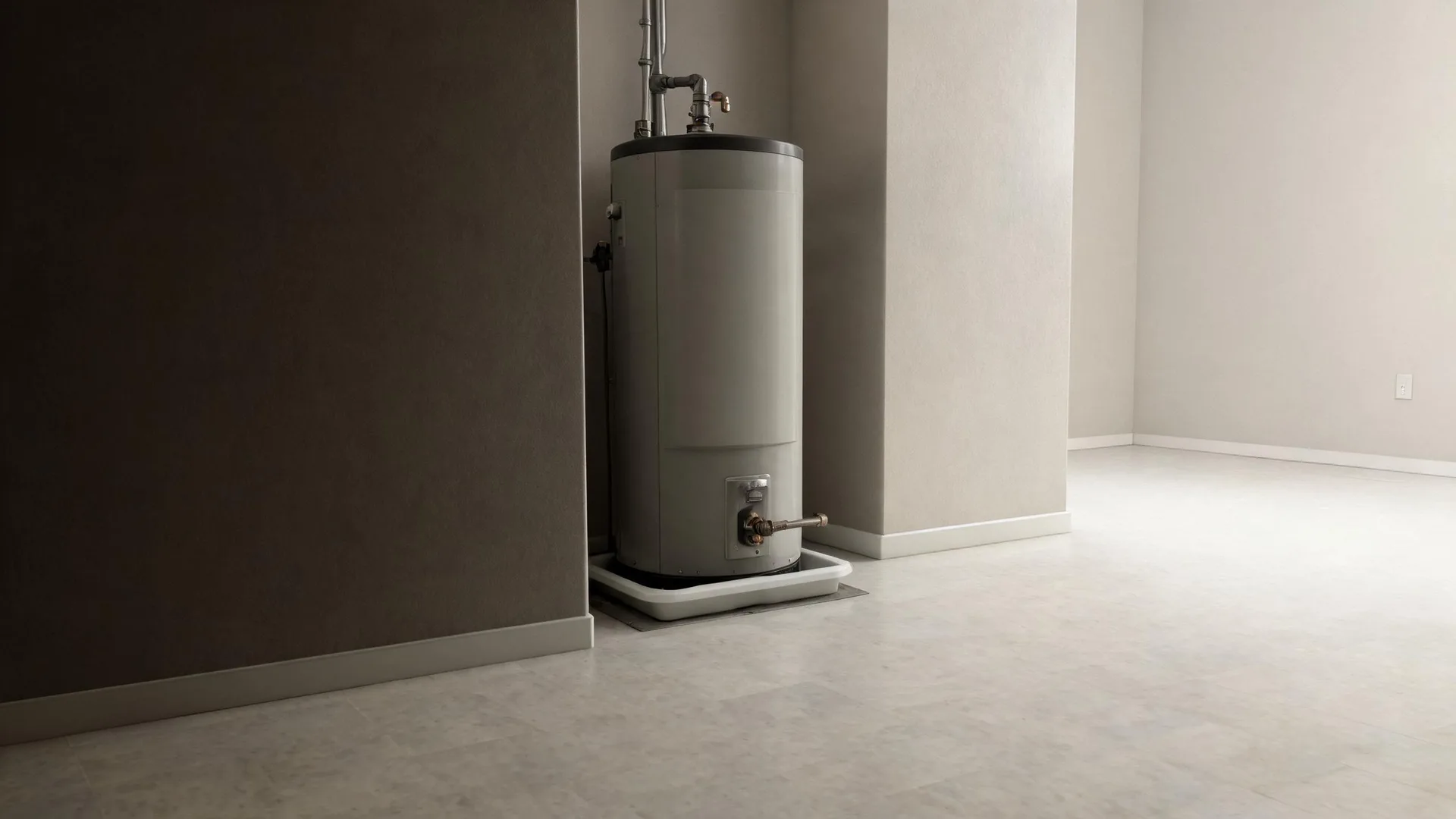
A water heater going into a Moore County home is not entering a sheltered environment. 159 severe weather events were recorded in Moore County, Tennessee between 2015 and 2024. At that rate, severe weather is a standing condition here, and a contractor sizing and positioning a new unit has to account for what the local climate regularly asks of it. Pipe connections, expansion components, and the unit's placement relative to exterior walls all carry more consequence in an area where the weather runs this hard. A catalog spec gets you a starting point; a contractor who works this county gets you an install built for where the house actually sits.
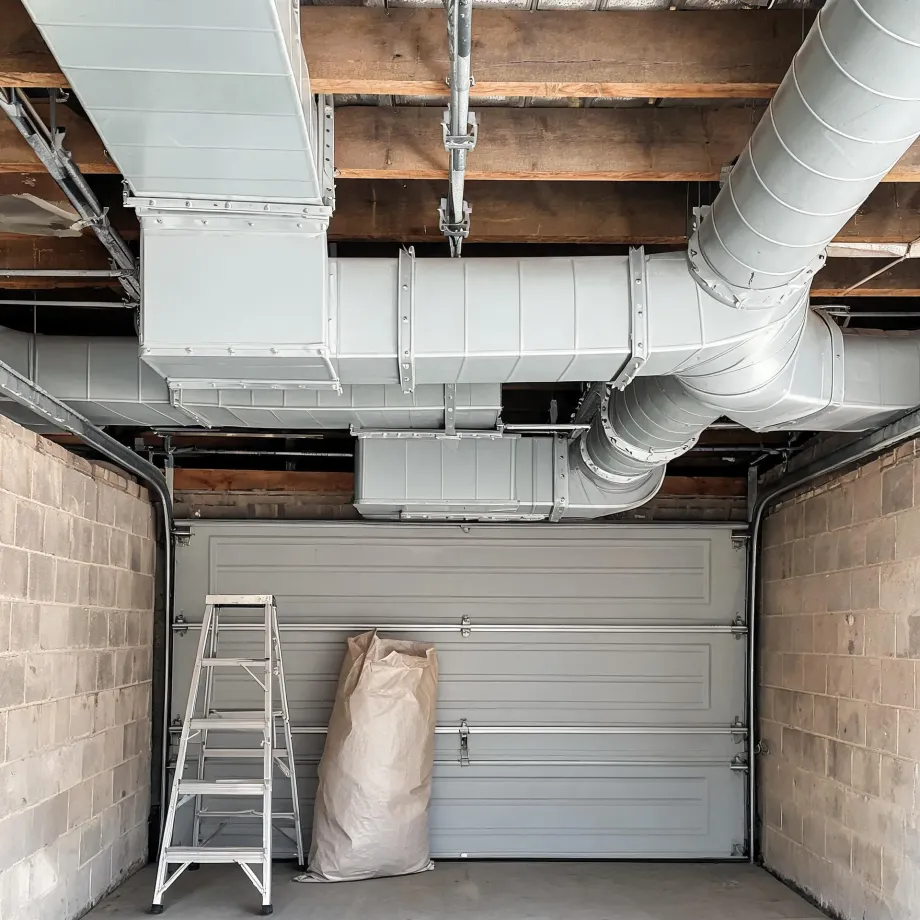
The wiring a house already carries is what determines how a water heater installation goes. Half the homes in Moore County, Tennessee were built in 1991 or earlier (2020-2024 ACS 5-year). Houses built around that time were wired for the loads that existed then, and a new electric water heater draws more than what many of those panels were laid out to handle. A contractor will open the panel, read what is there, and price the electrical work before the unit itself is ever ordered.
What a Water Heater Installation Covers
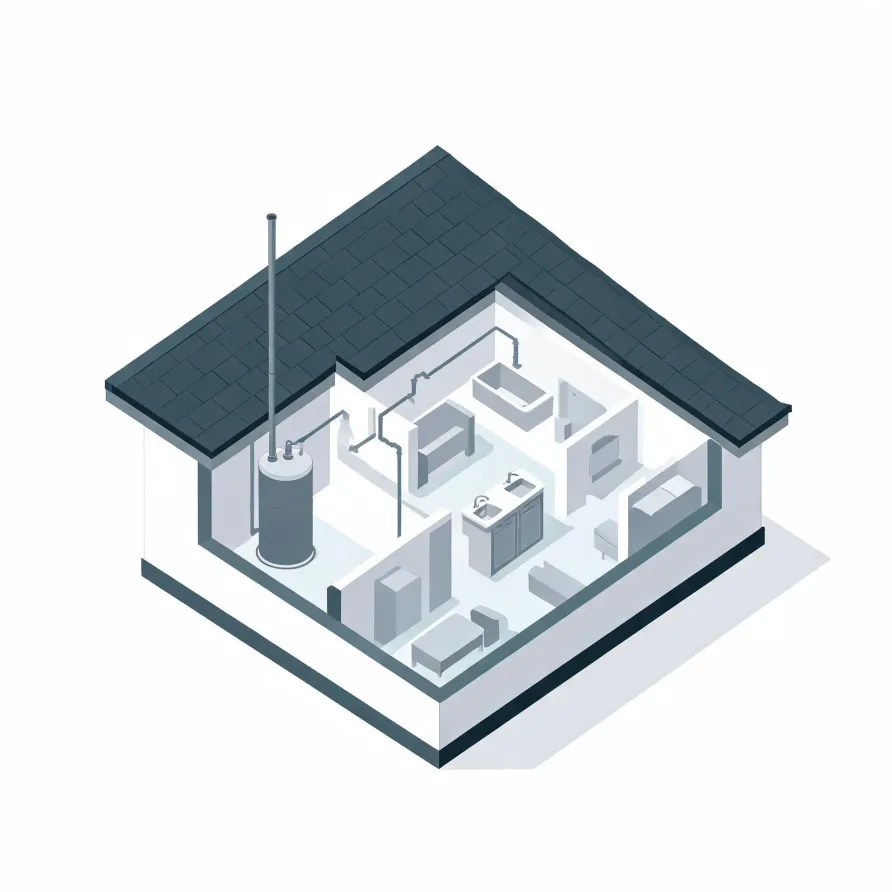
The tank is what most homeowners recognize first. It sits in a utility closet, garage, or basement and holds the water your household draws on for showers, sinks, and appliances. Attached to it are the cold-water inlet, the hot-water outlet, and the pressure relief valve, each mounted directly on the unit.
The flue or exhaust vent runs from the top of the tank up through the wall or ceiling, carrying combustion gases out of the house on gas-fired models. Alongside that, the supply lines connect the tank to your home's plumbing, and the drain valve sits near the base for servicing access.
The drawing shows a typical layout, and a licensed contractor determines what applies to your specific home.
Find a contractor in Moore CountyMoore County by the Numbers
159 severe weather events were recorded in Moore County, Tennessee between 2015 and 2024.
NOAA National Centers for Environmental Information, Storm Events Database, bulk CSV export, events 2015-01-01 through 2024-12-31.Half the homes in Moore County, Tennessee were built in 1991 or earlier (2020-2024 ACS 5-year).
U.S. Census Bureau, 2020-2024 American Community Survey 5-Year EstimatesMoore County, Tennessee holds 3,017 housing units (2020-2024 ACS 5-year).
U.S. Census Bureau, 2020-2024 American Community Survey 5-Year EstimatesOwners occupy 82.5% of the occupied homes in Moore County, Tennessee (2020-2024 ACS 5-year).
U.S. Census Bureau, 2020-2024 American Community Survey 5-Year EstimatesSevere Weather Events in Moore County
Weather patterns in Moore County put real demands on water heating equipment, from hard freezes that stress tanks and lines to humid summers that accelerate wear. Knowing what conditions a unit has to handle here is part of choosing and sizing the right installation.
159 severe weather events, 2015–2024. Source: NOAA National Centers for Environmental Information, Storm Events Database.