Tell us about the job
Takes about a minute. No obligation.
A contractor quoting a water heater installation in Davidson County is not pricing for average conditions. 579 severe weather events were recorded in Davidson County, Tennessee between 2015 and 2024. At that rate, severe weather is part of what every water heater here runs against season after season, and a contractor who ignores that when choosing capacity, materials, and mounting will undersize the job. The install has to hold under the kind of stress this county sees regularly, which is why local experience with this climate changes the spec before the first part is ordered.
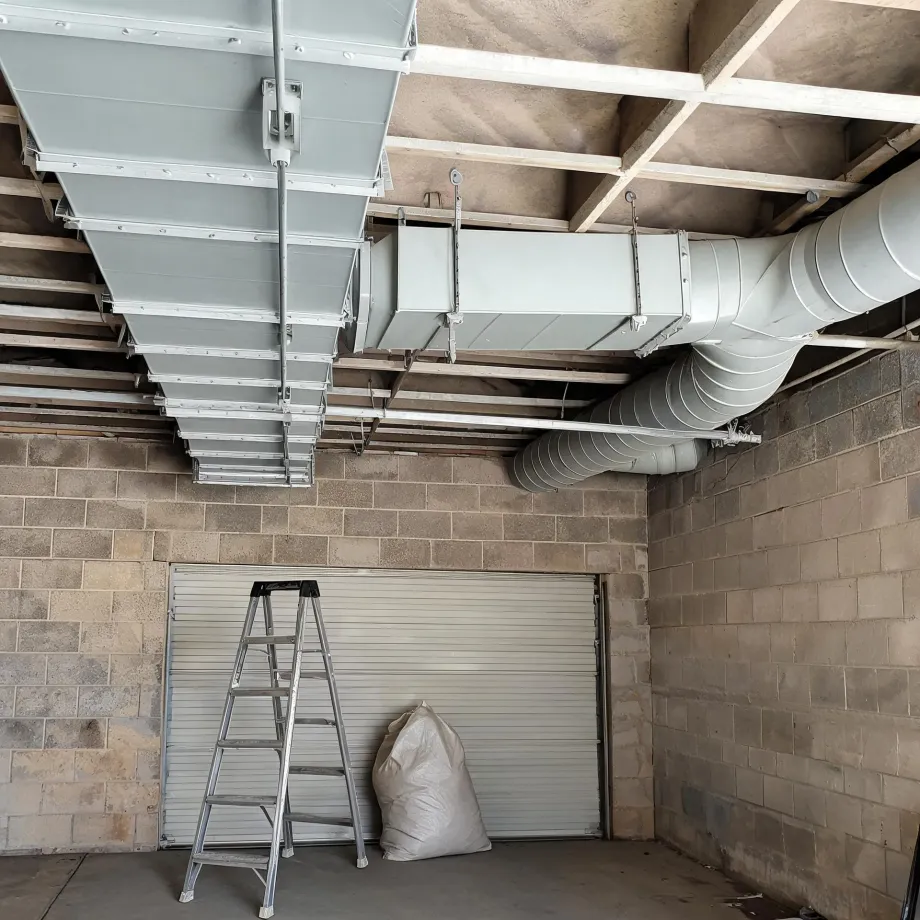
Ductwork and venting in a house this age were sized and routed for whatever was original to the building, and a new water heater may draw on runs, clearances, or flue configurations that were never meant for it. Half the homes in Davidson County, Tennessee were built in 1986 or earlier (2020-2024 ACS 5-year). That history is what a contractor reads from the existing system before anything else gets priced, because the flue path and the connections the old unit used are not always compatible with the new one. Where they are not, the installation scope changes before the unit is ever touched.
What a Water Heater Installation Covers
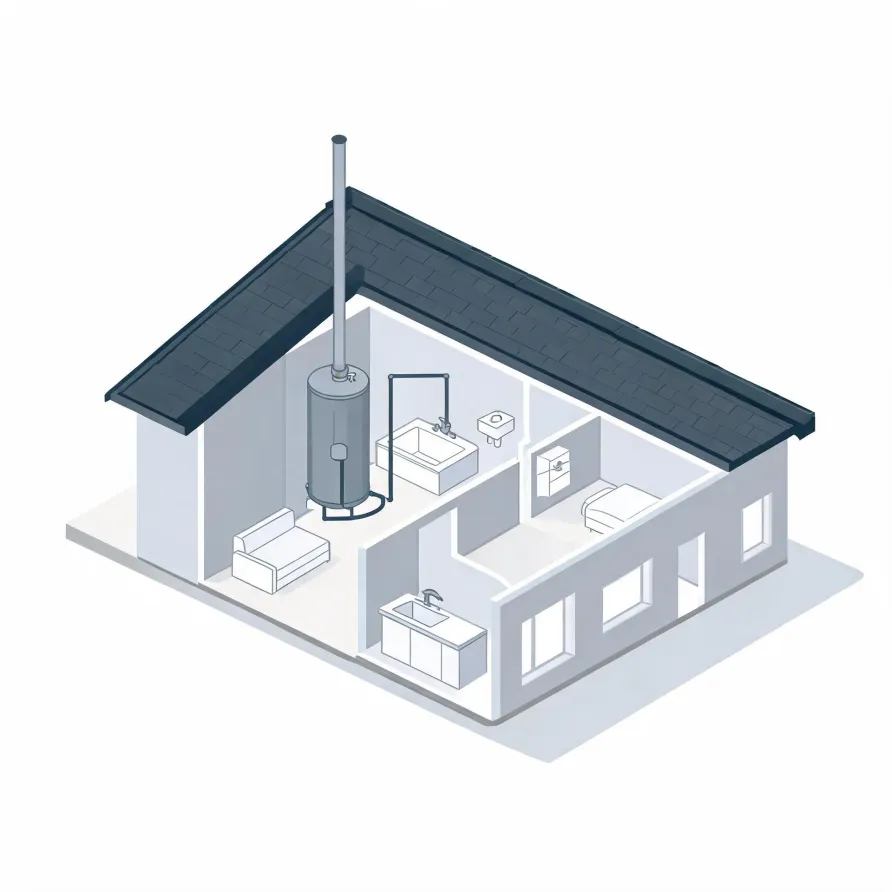
The tank or heating unit is the core of the system, sitting in a utility closet, basement, or garage depending on the house. It holds and heats the water your fixtures draw from. The pressure relief valve mounts directly on the unit and releases pressure if it climbs too high.
The supply and discharge lines connect the unit to the home's cold water intake and hot water distribution. A drain pan sits beneath the unit to catch any overflow, and the flue or venting runs from the unit to an exterior wall or roof to carry combustion gases out of the home.
The drawing shows a general layout, and a licensed contractor determines what applies to this particular house.
Find a contractor in Davidson CountyDavidson County, by the numbers
579 severe weather events were recorded in Davidson County, Tennessee between 2015 and 2024.
NOAA National Centers for Environmental Information, Storm Events Database, bulk CSV export, events 2015-01-01 through 2024-12-31.Half the homes in Davidson County, Tennessee were built in 1986 or earlier (2020-2024 ACS 5-year).
U.S. Census Bureau, 2020-2024 American Community Survey 5-Year EstimatesDavidson County, Tennessee holds 357,113 housing units (2020-2024 ACS 5-year).
U.S. Census Bureau, 2020-2024 American Community Survey 5-Year EstimatesOwners occupy 52.8% of the occupied homes in Davidson County, Tennessee (2020-2024 ACS 5-year).
U.S. Census Bureau, 2020-2024 American Community Survey 5-Year EstimatesSevere Weather Events in Davidson County
Local weather puts real demands on water heating equipment, and those demands vary by where you live. How hard Davidson County's climate pushes your system shapes what size and type of installation makes sense here.
579 severe weather events, 2015–2024. Source: NOAA National Centers for Environmental Information, Storm Events Database.